Stock brokers face constant cyber threats: phishing aimed at dealers, credential theft, ransomware and attacks on trading and back-office systems. SEBI's Cybersecurity and Cyber Resilience Framework (CSCRF) now expects regulated entities to detect and respond to these threats continuously. For most brokers, a managed SOC is the most practical way to get there without building a large in-house security team.
This article explains what CSCRF expects around security monitoring, what a managed Security Operations Centre actually does, and how to choose a provider.
What CSCRF expects from stock brokers
SEBI issued CSCRF in August 2024 to bring its earlier cybersecurity circulars together under one framework. Requirements scale with the size and category of the regulated entity, but the themes are common to all brokers:
- A board-approved cybersecurity and cyber resilience policy, with clear ownership.
- Continuous security monitoring, either through an in-house SOC, a market SOC or a third-party managed SOC, depending on the entity's category.
- Timely incident reporting, including the six-hour reporting window set by CERT-In for notifiable incidents.
- Regular vulnerability assessment and penetration testing, and periodic cyber audits.
- Log retention and storage of regulated data within India.
Our CSCRF compliance guide covers the full framework. Here we focus on the monitoring piece, because it is where most brokers need outside help.
What a managed SOC does
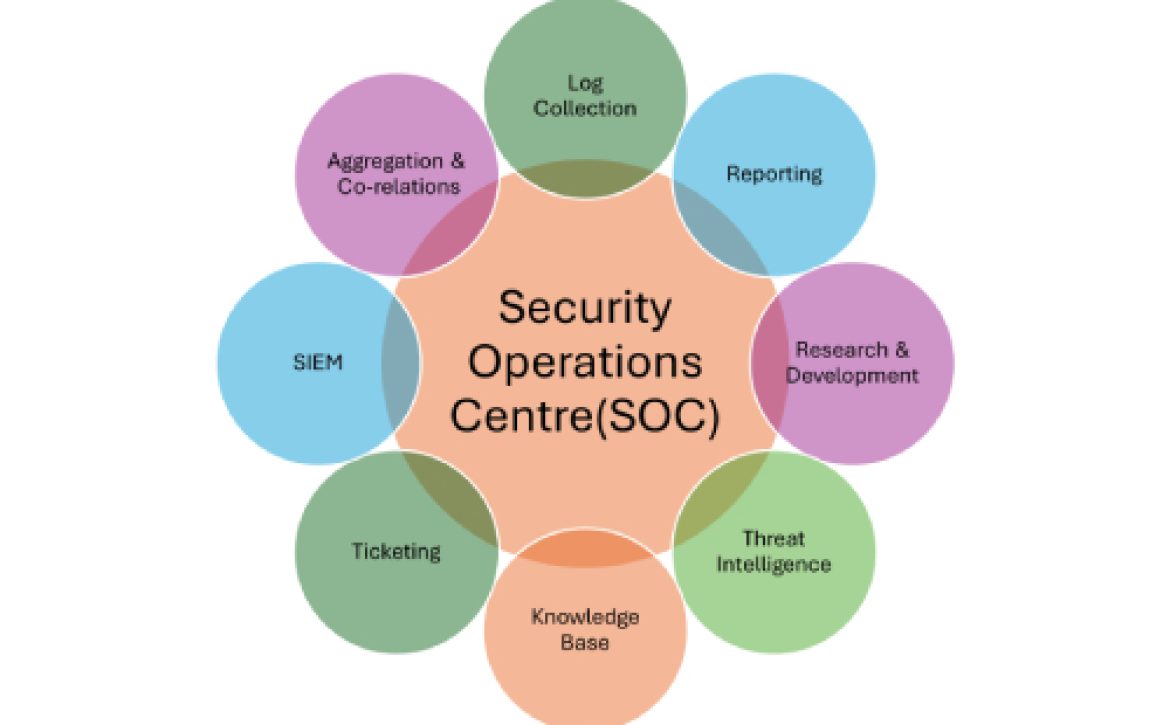
A Security Operations Centre is the team and technology that watch your environment for signs of attack, around the clock. With a managed SOC, a specialist provider runs it for you.
- Log collection: firewalls, servers, endpoints, email, Active Directory and trading applications send logs to a central SIEM platform.
- Detection: correlation rules and threat intelligence flag suspicious behaviour, such as impossible logins, privilege changes or data leaving the network.
- Triage: analysts investigate alerts, filter out noise and escalate real incidents with clear next steps.
- Response: isolating an infected device, blocking an IP or disabling a compromised account, following agreed playbooks.
- Reporting: regular reports for management and the evidence auditors ask for.
Why brokers choose a managed SOC over building one
Running a SOC in-house means hiring analysts for three shifts, licensing a SIEM, writing detection rules and keeping them current. For a mid-size or small broker, that cost is hard to justify, and skilled security analysts are scarce. A managed SOC spreads that cost across clients while giving each one 24/7 coverage, mature processes and analysts who see attack patterns across many organisations.
TM Solutech's managed SOC for brokers
We built our service around the realities of Indian capital market firms:
- 24/7 monitoring by our security team, with defined response times for critical alerts.
- Logs and data stored within India, aligned with CSCRF data localisation expectations.
- Use cases tuned for brokers: dealer terminal abuse, back-office access, API keys and trading platform anomalies.
- Incident reporting support so you can meet CERT-In and SEBI timelines.
- Audit-ready monthly reports mapped to CSCRF requirements.
- Integration with our incident response and VAPT services.
What to expect in the first 90 days
Onboarding usually happens in stages. In the first weeks, critical systems such as firewalls, domain controllers and trading servers are connected and baseline alerts are tuned. Next, endpoints, email and cloud services are added. By the end of the first quarter, you should have stable alerting, agreed escalation paths and your first audit-ready report.
How to choose a managed SOC provider
Ask every provider these questions before you sign:
- Where are logs and data stored, and who can access them?
- What are the response times for critical, high and medium alerts?
- Which of our systems will be monitored on day one, and which later?
- Do you help with regulatory incident reporting and audits?
- Can we see the dashboard and raw alerts, or only monthly reports?
A good provider answers these clearly and puts them in the contract. If you'd like to see how our managed SOC would fit your setup, book a consultation and we'll walk you through a sample report.
Thanks for your feedback!